How to Test the Coating Quality of Non-Stick Fry Cookware
Time:
2026-07-31 10:00
In the production process of non-stick cookware, the coating quality directly affects the product's non-stick performance, lifespan, and user experience. For cookware manufacturers and overseas buyers, simply focusing on the product's appearance is insufficient to judge the quality of non-stick pans. Professional testing methods are needed to evaluate the coating's adhesion, abrasion resistance, safety, and stability. Only non-stick frying pans that undergo strict quality control can meet the needs of different markets.
First, coating adhesion testing is a crucial step in testing the quality of non-stick cookware. A high-quality non-stick coating needs to form a stable bond with the pan surface, preventing peeling and flaking during long-term use. Manufacturers typically use a cross-cut test, creating standardized scratches on the coating surface and then testing for coating detachment with tape to determine the bonding strength between the coating and the substrate. Stronger adhesion generally indicates better product durability.

Second, abrasion resistance testing can assess the lifespan of the non-stick coating. Non-Stick Fry Cookware is frequently subjected to friction from spatulas, cleaning tools, and food during daily use. If the coating's abrasion resistance is insufficient, its non-stick effect can easily diminish. Therefore, professional manufacturers use abrasion testing equipment to simulate long-term usage environments, repeatedly rubbing the coating to observe for significant surface wear, thus determining whether the product meets long-term usage requirements.
Coating thickness testing is also a crucial step in quality control. A coating that is too thin may result in insufficient durability, while one that is too thick may affect coating uniformity and processing stability. During production, manufacturers typically use professional measuring equipment to check coating thickness, ensuring uniform coating distribution across different areas of the cookware and improving overall product performance.
Furthermore, high-temperature resistance is an important indicator of non-Stick Fry Cookware coating quality. Non-stick cookware needs to withstand high temperatures during cooking; if the coating cannot remain stable, it may affect the product's lifespan. Therefore, manufacturers need to conduct high-temperature tests to check for discoloration, cracking, or performance degradation under different temperature conditions.
Food safety testing is equally important. Because non-stick fry cookware comes into direct contact with food, the coating material must meet relevant food contact standards. Reliable suppliers typically conduct relevant testing on their products to ensure the coating material is safe, stable, and meets the regulatory requirements of different countries and regions. This is also one of the key factors that overseas buyers focus on when selecting suppliers.
In addition to laboratory testing, real-world usage testing can also help evaluate product performance. Manufacturers can comprehensively verify the non-stick effect, ease of cleaning, and overall durability by simulating cooking, cleaning, and long-term use environments.
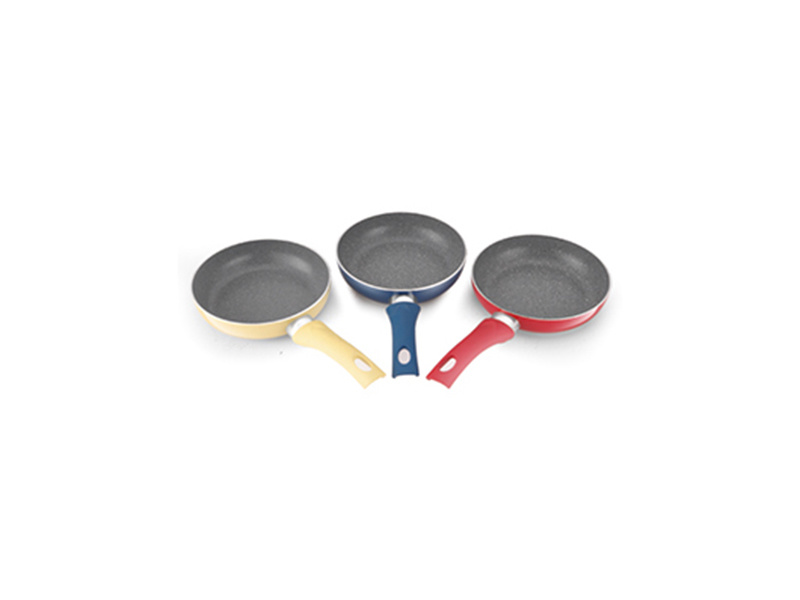
Testing the coating quality of non-stick fry cookware requires a comprehensive evaluation from multiple aspects, including adhesion, abrasion resistance, thickness, high-temperature stability, and food safety. For buyers, choosing a non-stick cookware manufacturer with a complete quality testing system and production experience can effectively reduce product quality risks and improve the product's competitiveness in overseas markets.
non-stick fry cookware
Related News

Contact Us
No.198 Meilong Road,Paitang Village,Chengxi New District,Yongkang,Zhejiang,China
Subscription