What quality standards should be considered when sourcing ceramic non-stick cookware?
Time:
2026-07-24 16:38
As consumer demand for healthy cooking and eco-friendly kitchenware rises, ceramic non-stick cookware has become a key product in the kitchenware market. For bulk purchasers, kitchenware brands, and foodservice suppliers, selecting the right supplier requires more than just looking at price; it demands a comprehensive evaluation of product quality, manufacturing processes, and safety standards. Only high-quality products that meet market demands can enhance brand competitiveness and minimize after-sales risks.
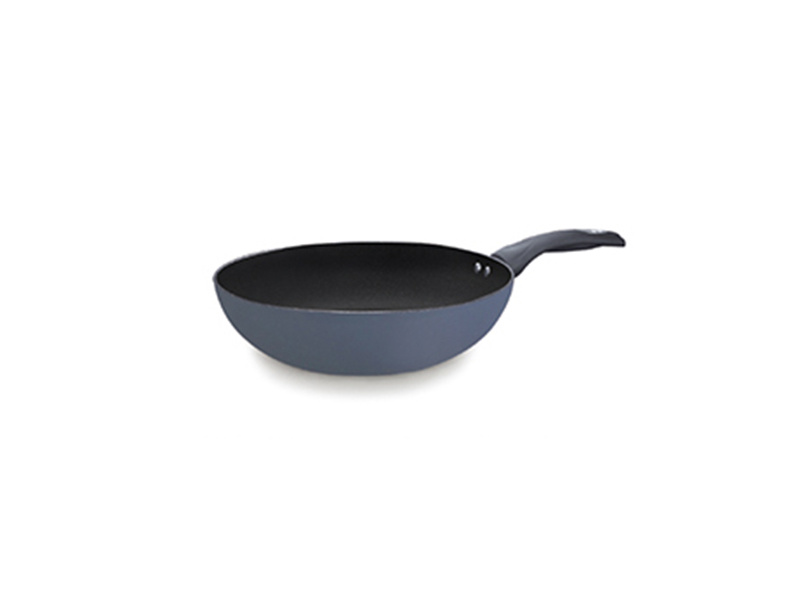
The ceramic coating is the core component of the cookware, and its performance directly impacts the user experience. When sourcing, it is crucial to examine the coating's uniformity, adhesion, and wear resistance.
High-quality ceramic non-stick cookware typically utilizes a multi-layer spraying process. This ensures the coating adheres firmly to the pan's surface, reducing issues such as peeling, cracking, or a decline in non-stick performance over long-term use. Coating thickness must also be carefully controlled; a coating that is too thin compromises durability, while one that is too thick can hinder heat conduction efficiency.
Purchasing companies can request relevant test reports—such as data on wear resistance, salt spray tests, and high-temperature performance—to assess how the product will perform over time.
Beyond the coating, the material of the pan body itself determines the overall quality of the cookware. Common materials on the market include aluminum alloy, stainless steel, and cast aluminum.
Premium ceramic non-stick cookware often features a high-strength aluminum alloy body, offering a balance of manageable weight, rapid heat conduction, and even heat distribution. Additionally, the thickness of the pan body must meet design specifications to prevent deformation caused by insufficient material thickness.
For bulk procurement, it is also important to evaluate the supplier's capabilities in stamping, casting, polishing, and surface treatment; consistent manufacturing processes ensure product uniformity across different batches.
Since ceramic non-stick cookware comes into direct contact with food, food safety is a critical factor in the procurement process. Suppliers should be able to provide certifications that meet the requirements of the target market, such as food-contact safety tests, heavy metal testing, and relevant environmental certifications.
This is particularly important for export markets, where safety standards for kitchenware vary by country and region. Purchasers must verify that products comply with local regulations to avoid issues with customs clearance or market sales resulting from inadequate certification. Kitchen environments often involve high-temperature heating, so ceramic non-stick cookware must possess excellent heat resistance. When sourcing, it is important to understand the product's maximum operating temperature, thermal cycling performance, and stability under prolonged heating.
Additionally, factors such as handle attachment methods, sealing structures, and overall impact resistance affect the product's lifespan. For instance, secure riveting or welding processes can reduce safety risks associated with long-term use.
When selecting a supplier for ceramic non-stick cookware, one should not rely solely on individual product samples; it is also essential to evaluate the manufacturer's overall quality management system.
Reliable manufacturers typically maintain comprehensive production processes, including inspections for raw materials, semi-finished goods, coatings, and finished products, as well as packaging checks. Furthermore, manufacturers with OEM/ODM capabilities can customize product dimensions, colors, packaging, and functional designs to meet specific client needs, making them ideal partners for brand sourcing.
Ceramic non-stick cookware is susceptible to impact during international shipping, making packaging quality a key procurement criterion. Top-tier suppliers usually employ scratch-resistant and shock-absorbing packaging to prevent surface scratches or coating damage.

For large-volume export orders, it is also crucial to verify the supplier's delivery reliability and experience with logistics coordination to ensure supply chain stability.
When sourcing ceramic non-stick cookware, key areas of focus should include the quality of the ceramic coating, the cookware body material, food safety standards, heat resistance and durability, manufacturing capabilities, and protective measures for transport. Selecting a supplier with mature manufacturing processes and rigorous quality control systems not only ensures a supply of stable, reliable products but also enhances brand image and market competitiveness. In the context of long-term procurement, quality standards are a more significant determinant of commercial value than price alone.
ceramic non-stick cookware
Related News

Contact Us
No.198 Meilong Road,Paitang Village,Chengxi New District,Yongkang,Zhejiang,China
Subscription