The Impact of Material Differences on Non-stick Fry Cookware Performance
Time:
2026-02-04 17:15
With the increasing popularity of healthy cooking concepts, non-stick fry cookware has become a common choice in home kitchens. However, different materials used in non-stick cookware vary significantly in terms of heat conductivity, durability, and user experience, directly impacting daily cooking results. Understanding these material characteristics helps consumers make more informed choices based on their needs.
Aluminum non-stick fry cookware is widely used due to its excellent heat conductivity. Aluminum heats evenly and quickly, making it suitable for frequent cooking scenarios such as stir-frying and pan-frying, effectively reducing food sticking caused by localized overheating. However, aluminum itself has relatively low strength, usually requiring a thicker pan body or composite bottom design to improve stability and lifespan.
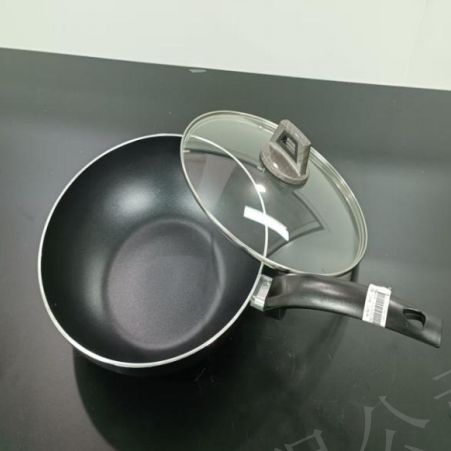
Stainless steel composite non-stick cookware excels in structural strength and durability. These cookware often employ a multi-layered structure with a stainless steel outer layer combined with an aluminum or copper heat-conducting layer, balancing good heat conductivity and resistance to deformation, making it suitable for long-term, frequent use. However, compared to pure aluminum, its heating rate is slightly slower, requiring more precise heat control.
Cast aluminum and cast iron non-stick fry cookware is known for its high heat capacity and excellent heat retention. Its heavy body helps maintain a stable temperature during cooking, making it suitable for methods requiring sustained high temperatures, such as searing steaks and braising. However, these cookwares are relatively heavy, offering less maneuverability and requiring a certain level of strength from the user and a suitable cooktop.
Ceramic-coated non-stick cookware has gained increasing attention in recent years. Its smooth surface, high-temperature resistance, and lack of odor make it suitable for low-oil or low-to-medium temperature cooking, and it's also relatively easy to clean. However, the ceramic coating is sensitive to impacts and rapid temperature changes, requiring careful maintenance to avoid affecting its non-stick properties.
The material differences in non-stick fry cookware directly determine its heat conduction efficiency, durability, and culinary applicability. When choosing, consumers should consider their family's cooking habits, available heat, and frequency of use, rationally weighing the advantages and disadvantages of different materials to achieve a more stable and comfortable cooking experience.
non-stick fry cookware
Related News

Contact Us
No.198 Meilong Road,Paitang Village,Chengxi New District,Yongkang,Zhejiang,China
Subscription